


Hallux Limitus
Our physiotherapists explain more on this page about elevated toes, also known as “jubeltenen.” This condition can cause uncomfortable and painful symptoms, so it’s understandable that you may have questions. Fortunately, there are simple and affordable ways to treat and prevent this issue. We’re happy to explain them to you below.
What are elevated toes?
Elevated toes refer to a condition in which the final toe joint (the tip of the toe) is positioned at an unnatural upward angle. As a result, the tip of the toe does not touch the ground, which can lead to painful symptoms and discomfort when walking or wearing shoes.
What causes elevated toes?
An elevated toe usually develops as a compensatory reaction due to limited mobility in the big toe. When the big toe can’t move properly, it alters the alignment of the other toes—eventually causing one of them to lift upward.
In some cases, the final joint of the big toe itself points upward as a result of stiffness in the toe joint.
Elevated toes are also commonly associated with overpronation or Hallux Valgus (a bunion deformity).
How can you recognize it?
Elevated toes are often recognizable by the following signs:
- Holes in your socks from friction between the toe and the top of the shoe
- Sports shoes that wear out or tear on top, due to an upward-pointing toe
- A black or blue toenail on one of your toes
- Painful spots or pressure points on the elevated toe
What can you do about elevated toes?
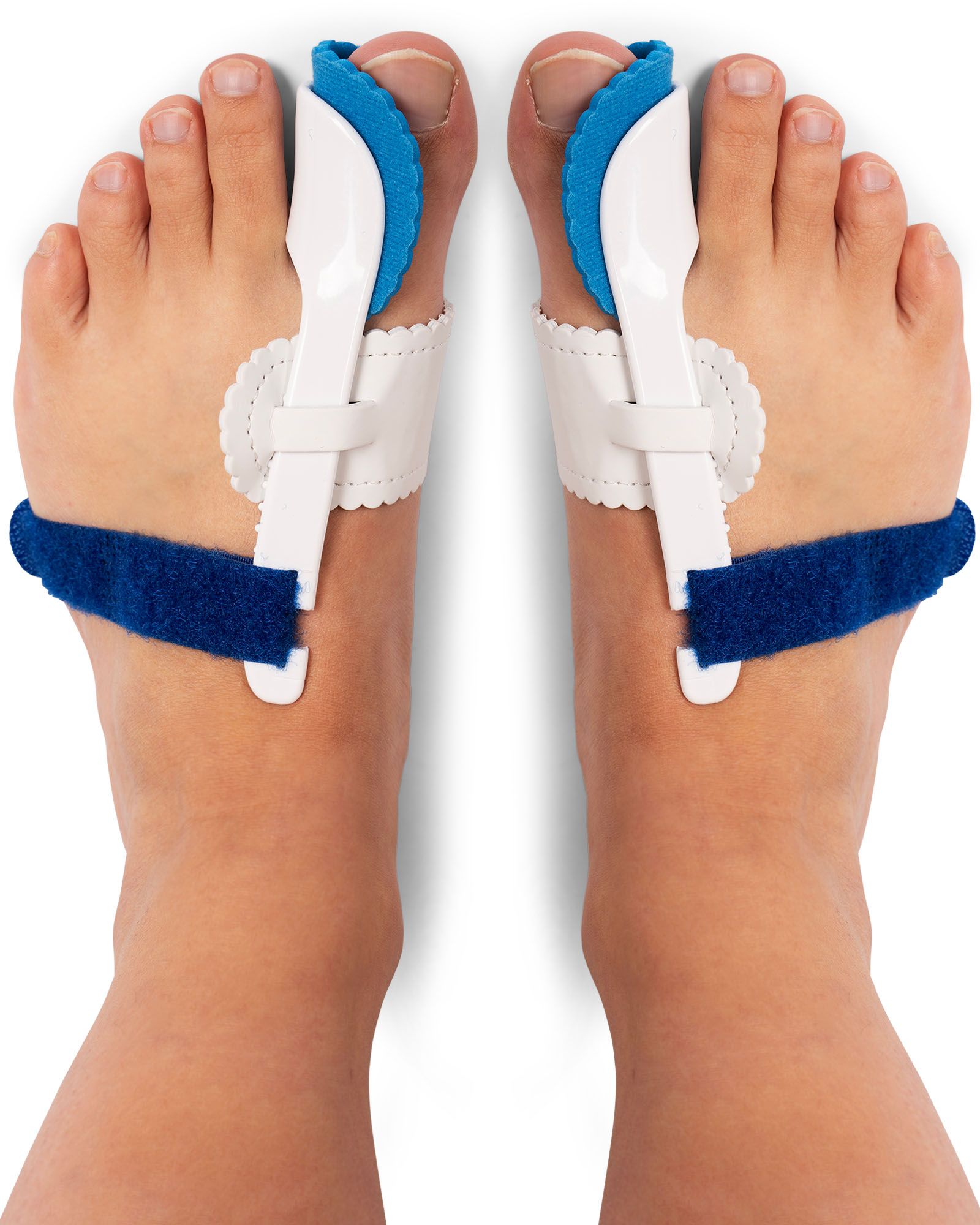
If you suffer from elevated toes, they can often be corrected using a toe corrector or toe spreader. These devices help guide your toes back into proper alignment. To see results, they should be worn as often as possible over a period of 6 to 8 weeks.
Once your toes are back in their correct position, it's important to wear shoes that give your toes enough space to move freely. The sole of the shoe also plays a crucial role—opt for shoes with a firm and supportive sole to maintain alignment. Additionally, you can use special insoles designed to prevent elevated toes, such as Hallux Valgus insoles or overpronation insoles. These help prevent recurrence and provide added support.
Our team of specialists has selected a range of products at the bottom of this page to help prevent or correct elevated toes. A toe spreader is a low-cost, highly effective solution. Insoles designed to support proper foot posture are also very beneficial. Our physiotherapists and podiatrists highly recommend looking into these options.
Do you have further questions?
Do you still have questions about elevated toes or something else? Feel free to get in touch! Our team of specialists is here and happy to help.


- Physiotherapist
- Sports podiatrist
- Manual therapist
- Podopostural therapist
- Myofascial dry needling specialist